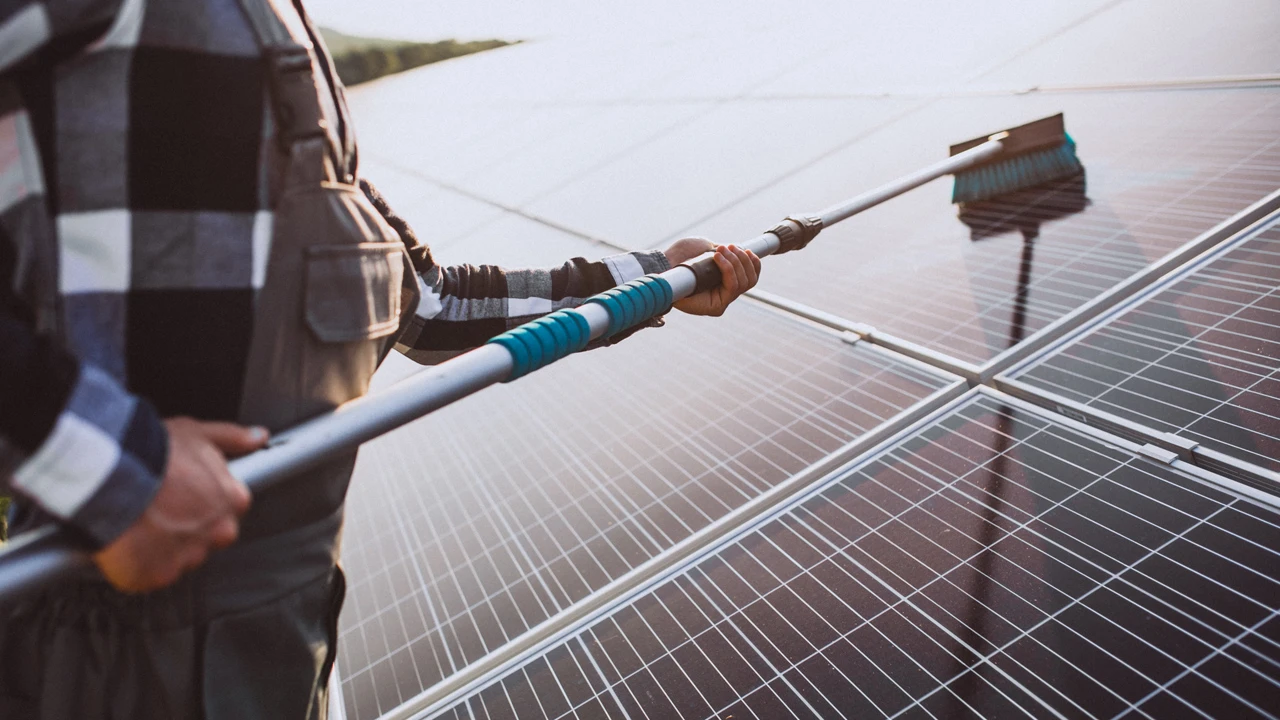
Dust, pollen, agricultural particles, bird droppings and mineral residue reduce light transmission through module glass and may lower photovoltaic output. The effect depends on the type and distribution of soiling, module inclination, rainfall and local conditions.
Cleaning should not follow a rigid calendar. It should be justified by visual inspection and production analysis after excluding variations caused by weather, temperature, shading, snow or equipment faults.
When cleaning is required
The system should be assessed when persistent deposits are visible or normalised production remains below expectations under comparable weather conditions. Inverter alarms and changes in shading must be reviewed before attributing a loss to soiling.
Localised, uneven deposits require particular attention because they can create electrical mismatch between cells or modules and contribute to thermal stress. If cracked glass, overheating marks, loose cables or exposed connectors are identified, cleaning must stop and a technical inspection must be arranged.
Essential safety requirements
Photovoltaic modules generate DC voltage whenever they are exposed to light. Switching off the inverter does not automatically remove voltage from DC circuits. Connectors, junction boxes, switchboards and cables must not be opened or handled during washing.
Work on roofs or at height must be performed only by trained personnel using compliant fall-protection and anchorage systems. Owner cleaning is appropriate only when the complete surface can be reached from the ground or another secure platform.
Always follow the module and inverter documentation and the shutdown procedure specified by the installer. Do not work during rain, strong winds, freezing conditions or thunderstorms.
Recommended technical procedure
1. Select suitable conditions
Clean early in the morning or in the evening, when modules are cool and irradiance is low. Cold water applied to hot glass can cause thermal shock, while rapid evaporation promotes mineral spotting.
2. Conduct a preliminary inspection
Inspect the glass, frames, mounting structure, cables and connector areas. Any damage or sign of electrical arcing requires the operation to stop and the system to be assessed by a specialist.
3. Remove deposits
Rinse the surface with clean water at moderate pressure. Adherent deposits may be removed with a very soft brush or a tool approved for photovoltaic glass, without applying force or stepping on modules. Do not direct water at junction boxes, connectors or cable entries.
Low-mineral or demineralised water reduces spotting. A cleaning agent may be used only when approved by the manufacturer and mixed at the specified concentration. Water alone is sufficient in most situations.
4. Rinse and verify
Remove all residue and allow the surface to dry. Restart the system in accordance with the technical procedure, then review inverter alarms and production under comparable weather conditions. A persistent deviation requires technical diagnosis.
Prohibited methods and materials
Do not use:
- pressure washers;
- stiff brushes, abrasive pads, blades or metal tools;
- household detergents, solvents or products of unknown composition;
- hot water, salt or de-icing chemicals;
- any method that requires standing or walking on modules.
These methods may damage the anti-reflective coating, seals, frames, cabling or equipment warranty.
Frequency and preventive maintenance
Frequency must be determined by site conditions. Systems near unpaved roads, construction sites, agricultural land, trees or large bird populations require more frequent checks. For normally exposed installations, continuous monitoring and one or two visual inspections per year are generally sufficient.
Professional maintenance can combine cleaning with checks of the mounting structure, fastener torque, cabling, protection devices and inverter operation. Snow should normally be allowed to slide off; mechanical removal should be undertaken only by qualified personnel using compatible equipment.
Additional instructions are available in the Solar Panel Cleaning Guide (PDF).
For difficult-to-access installations, persistent deposits or unexplained production losses, request a Megawatt inspection and professional maintenance service.