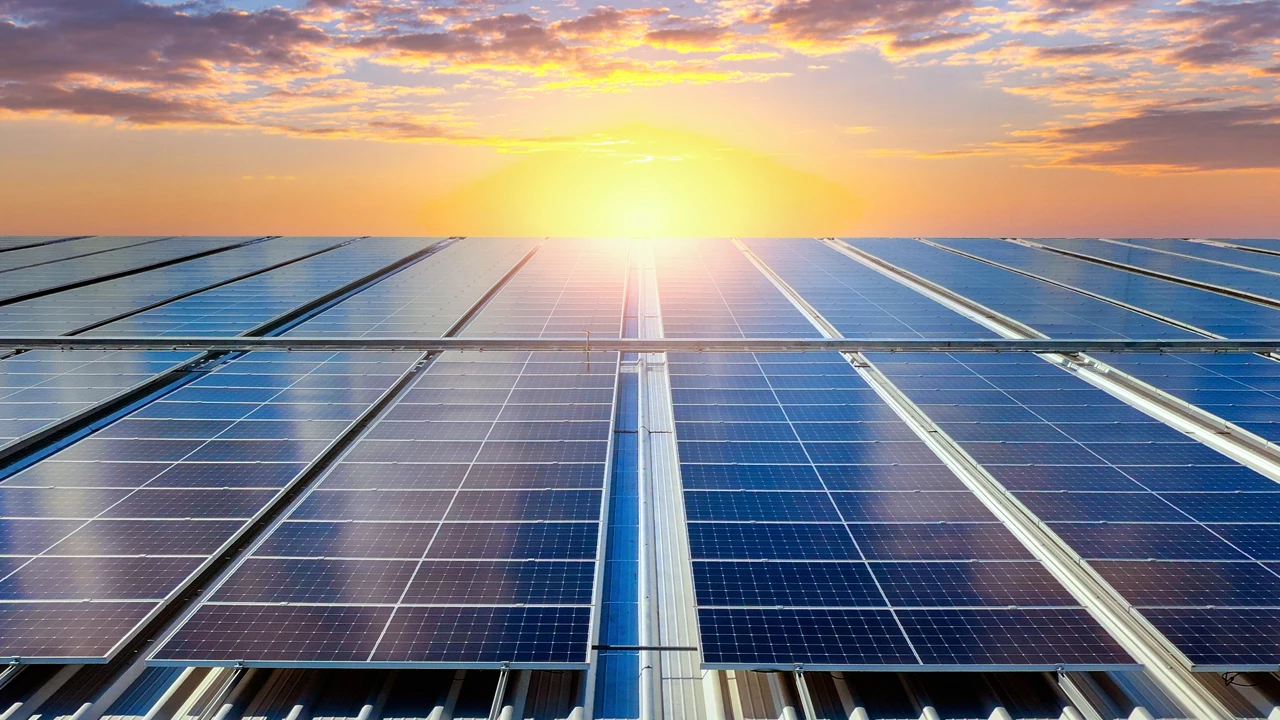
A photovoltaic system reduces an electricity bill when solar generation replaces electricity that would otherwise be purchased from the grid. The principle is straightforward, but the value of the savings depends on how the system is sized and how closely solar production matches the building's consumption.
In the Republic of Moldova, where energy costs matter to households and businesses alike, generating electricity for on-site use can provide greater budget stability over the long term.
To learn more about the technical process, read How do solar panels work?.
Self-consumption delivers the most direct savings
A photovoltaic system generates electricity during daylight hours. If a home or business is using electricity at the same time, the solar output is consumed on site and less electricity needs to be purchased from the supplier.
The greater the share of production used immediately, the stronger the potential financial benefit. A system should therefore be sized using actual bills and the building's consumption profile, not simply the amount of roof space available.
Self-consumption can be improved by running certain loads during solar-production hours, such as an electric water heater, heat pump, air-conditioning system, machinery or an electric-vehicle charger. A battery can shift some daytime production to the evening, but its financial value should be assessed separately.
What happens to surplus electricity?
When production exceeds immediate consumption, surplus electricity can be exported to the grid if the system has been properly connected and contracted.
The net-billing scheme has applied to new prosumers in the Republic of Moldova since 2024. Electricity drawn from the grid and electricity exported to it are recorded separately, while the value of the surplus is determined under the legal framework and the rules set by the authorities and suppliers. Net billing does not mean that one kilowatt-hour exported automatically offsets one kilowatt-hour consumed on a one-for-one basis.
Some customers connected under the previous rules continue to use net metering during the transition period established by law. Conditions, capacity limits and calculation formulas may change. Before investing, check the current requirements with ANRE, the relevant system operator and your electricity supplier.
Why does the bill not always fall to zero?
Photovoltaic production is higher in summer and lower in winter, while consumption may follow a different pattern. The final bill can still include electricity purchased during hours without solar production, as well as other regulated or contractual charges.
The result depends on several factors:
- installed capacity and estimated annual production;
- panel orientation, tilt and shading;
- the amount of electricity consumed as it is generated;
- the price of purchased electricity and the value of exported electricity;
- system losses and normal equipment degradation;
- financing costs, if the project is funded through a loan;
- maintenance costs and any future equipment replacements.
A responsible provider cannot promise a “zero bill” without a detailed analysis. A professional calculation should present several scenarios and clearly explain its assumptions.
How long does it take to recover the investment?
The payback period is estimated by comparing the total project cost with expected savings and revenue over the system's operating life. There is no universal figure: two systems with the same capacity can perform very differently if they are installed at different sites or serve different consumption profiles.
A sound assessment should include:
- monthly consumption for at least the previous 12 months;
- the daily consumption profile;
- estimated production at the specific location;
- the expected self-consumption rate;
- current grid-connection and billing conditions;
- the full cost of equipment, installation and maintenance.
In addition to reducing energy costs, solar panels offer a long service life and relatively low maintenance requirements. Most quality modules carry long-term performance warranties, while monitoring helps identify abnormal performance quickly.
A solution designed around your consumption
Megawatt.md designs and installs turnkey photovoltaic systems for homes and businesses throughout the Republic of Moldova. Before recommending a capacity, we analyse electricity bills, the consumption profile, the available roof or land and the grid-connection conditions.
This allows us to estimate savings using real data rather than general promises. Contact us for a personalised assessment and find the configuration that offers the right balance between investment, self-consumption and long-term savings.